Clean Water and Healthy Beginnings For Babies in Tanzania
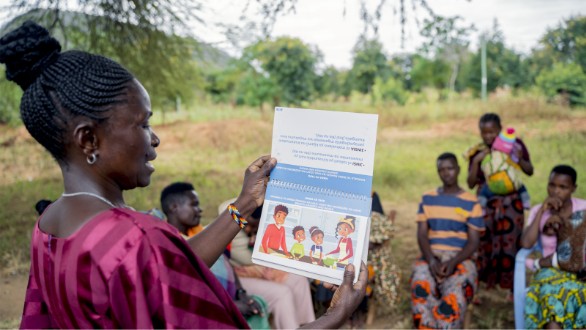
Health Officer Maryfrida Dengu Educates in Mpwapwa
Babies explore the world through touch, reaching for objects and bringing their tiny hands to their mouths to understand their surroundings. Eyes wide with curiosity or resting closed while sleeping, they trust people around them to keep them safe.
A baby’s health is protected by what others make safe, especially the water that touches their hands and the surfaces around them.
Safety depends on more than loving care. Safe water, sanitation, and hygiene help protect babies from preventable diseases, support healthy growth, and create cleaner homes, schools, and health clinics. From washing hands to safe childbirth, these essentials are part of healthy beginnings.
2 out of 5 people still lacked safely managed sanitation
3.4 billion people still lack safely managed sanitation services.
JMP Report, Progress on household drinking water, sanitation and hygiene 2000-2024: Special focus on inequalities.
When clean water and sanitation are out of reach, families face greater risks, and illnesses that could be prevented can change the course of a child’s life.
That’s why Water For People works with communities to strengthen water systems, improve sanitation, and support healthier futures for every child – for generations to come.
Healthy Beginnings for Babies
In Tanzania, Doreen Mussa sits with her 8-month-old daughter in her lap, preparing to feed her. She pauses and washes her hands before she begins.
Just a few months ago, she wasn’t sure what motherhood would be like. "Am I going to be able to manage having a child?" Doreen wondered with excitement and hope.
Babies aren’t born with a handbook, and even if they were, each family has their own routines, habits, and unique ways of navigating parenthood.
Starting in 2023, Water For People and local leaders reflected on progress in Mpwapwa, Tanzania, and identified two ongoing challenges:
- contamination of water sources
- continued open defecation.
Community discussions revealed that both issues were closely linked to how child feces were disposed of and managed, highlighting an opportunity to strengthen sanitation practices and protect community health.
A solution was born. The new program replaced text-heavy training materials with accessible, culturally appropriate learning tools that better engage caregivers, including people with low literacy levels, hearing impairments, and other underserved communities.
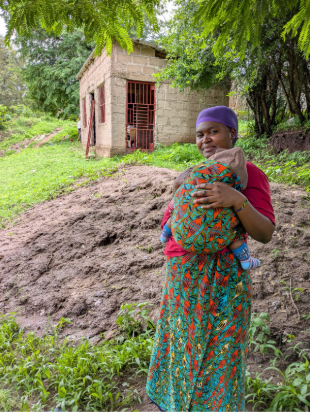
Meet Maryfrida Dengu, Health Officer
In Mpwapwa, Tanzania, Maryfrida Dengu doesn’t always educate caregivers by standing at the front of a classroom.
You can often find her sitting alongside learning participants, supporting other community health workers to lead sessions. She sees the inherent love in each caregiver – and bolsters their confidence with tangible ways to keep their babies safe.
As the district’s health officer, Maryfrida travels to clinics and homes to educate mothers, caregivers, and health workers about baby health and hygiene.
She demonstrates how to wash hands effectively, prepare food safely, and keep a child’s environment clean.
"We teach them how to care for their children so that they do not get sick, especially during feeding, upbringing, and in their surrounding environment," Maryfrida says.
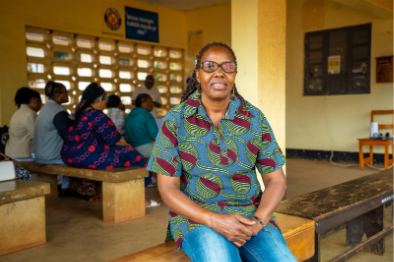
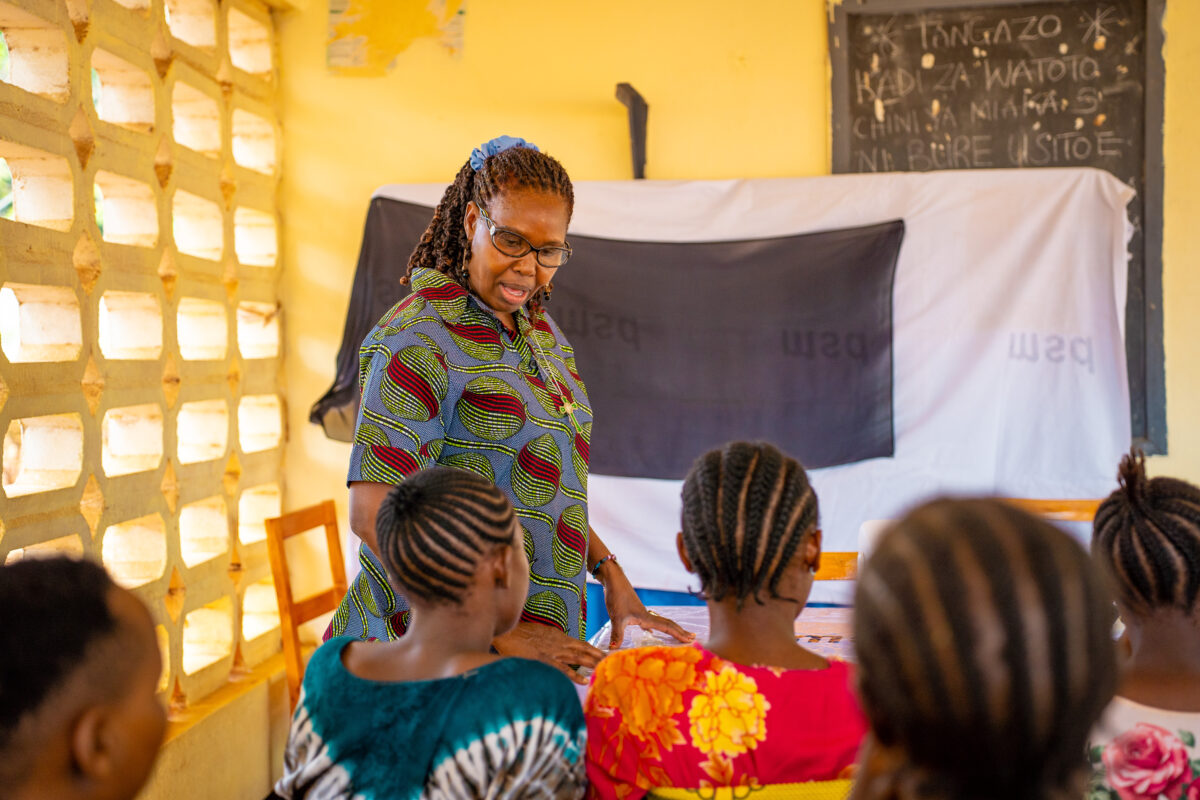
A Visual Approach to Community Education
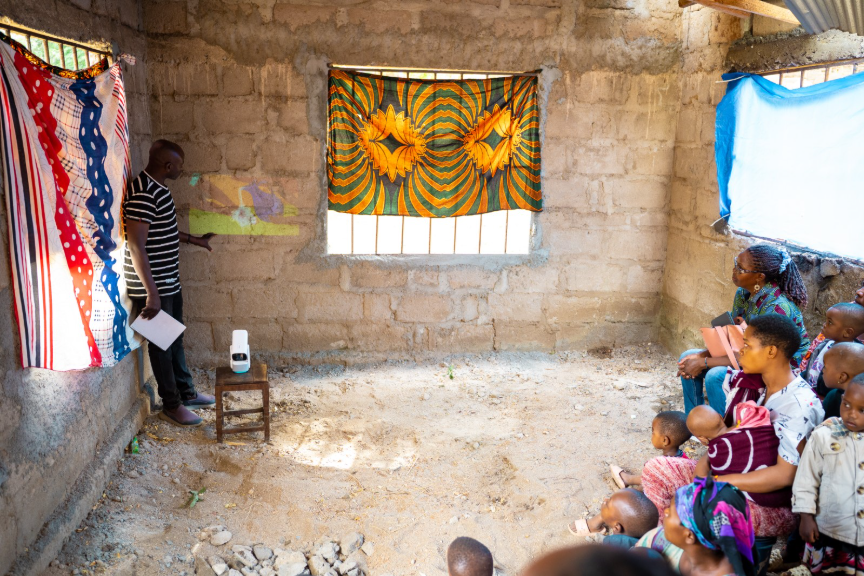
Health workers gather families to watch images and videos projected onto walls, making key health messages easier to understand and remember.
The programs information was sophistically created through Human-Centered Design and Social Ecological Model methods – made uncomplicated through real-life visuals.
"By learning visually, they see the reality of how to care for their children," says Maryfrida.
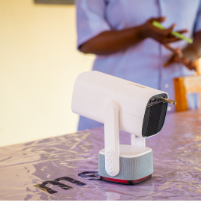
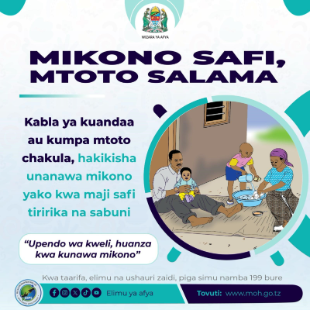
The program brings accessible and culturally relevant health education directly into communities for a wide range of caregivers; the program developed an animated video with sign language integration, four audiovisual clips, and 14 posters. It also distributed 16 smart projectors across 11 health care facilities.
The materials reached families through posters in health facilities, community radio stations, social media, and community health worker–led sessions during home visits and group meetings.
Key health messages are reinforced where caregivers regularly seek care for their babies.
Newborns Deserve a Future Free From Preventable Disease
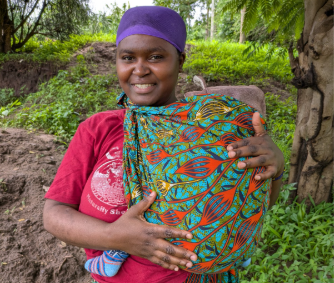
Doreen reflects on what she took from the community sessions she attended: washing hands using running water, and keeping utensils, clothes, and the surrounding environment clean.
"Taking care of a child is not a job only for women, but everyone in the family," Doreen emphasizes. Her husband supports her. They learned side by side.
"It was helpful to watch the videos rather than just receive a piece of paper with information," Doreen recalls. With confidence as a new mother, the worry Doreen once felt has eased.
Scalable Success for Health Across Tanzania
In Mpwapwa, Tanzania, caregivers like Doreen now have practical knowledge to keep tiny hands clean, prepare food safely, and protect young children from illness. Through the program, 1,269 parents, caregivers, and guardians learned hygiene practices that support healthier beginnings during a child’s first 1,000 days of life.²
What began as a pilot in 2023 grew into a district-recognized Baby Water, Hygiene, and Sanitation program in Mpwapwa. Fifty health workers were trained and went on to reach families with culturally relevant learning materials designed to make health education more accessible and engaging.
The program showed that visual learning tools, including animations and videos, can make health messages easier to understand and remember than traditional text-heavy materials. Sign language integration also helped ensure that people with hearing impairments could participate and benefit.
Technology played an important role as well. Smart projectors enabled health workers to bring interactive learning experiences into rural communities, helping reach caregivers in low-literacy settings with information that could improve daily hygiene practices.
Essential for scalability, collaboration with government institutions helped strengthen the program’s technical quality, credibility, and long-term sustainability. The lessons learned in Mpwapwa continue to inform Water For People’s work, which reached 180,226 people with hygiene education globally in 2025.²
Additional Resources:
- ¹ JMP, "Progress on household drinking water, sanitation and hygiene 2000-2024: Special focus on inequalities, " 2025.
- ² Water For People monitoring and evaluation.