In rural Bolivia, women plumbers are breaking barriers and keeping clean water flowing. Their technical skills are vital for maintaining systems that communities rely on every day. It is encouraging news that the demand for plumbers is growing – as more families, schools, and clinics gain access to safe water and sanitation solutions.
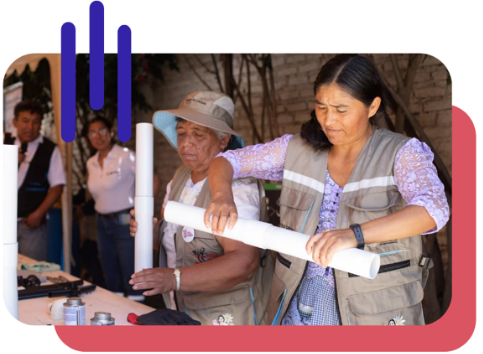
Pictured: One step closer to her goal of becoming a certified plumber,
Bertha Cuchallo connects pipes to complete training.
Standing among a group of women, comfortably carrying her baby on her back in an aguayo wrap, Bertha Cuchallo will soon complete her technical training to become a certified plumber.
"Before, people would tell us that only men could do plumbing work and women were only for cooking. But now, it’s no longer like that. It has changed," Bertha shares.
In collaboration with Water For People, the first cohort of 76 women completed their training Red de Mujeres Plomeras (Network of Women Plumbers) in Bolivia’s Arani Municipality on March 14, 2025.
In addition to acquiring technical skills, participants strengthened their self-esteem and leadership abilities, recognizing themselves as agents of change in their communities.
"I no longer need to look for a plumber to do something simple for me. I can do it. I’m happy about that," says Antonia Paraguayo. Upon passing the evaluation, participants are certified to offer specialized services, participate in community sanitation projects, and access new opportunities for dignified employment.
The program fosters economic autonomy of rural women and ensures clean water and sanitation for generations.
Water For People’s Country Director in Bolivia Andrés Abasto says, "Skilled labor in plumbing has added great value in rural areas." Participants can find employment maintaining plumbing systems in health centers, schools, buildings, and homes.
Over the last eight years, Water For People has worked to close the sanitation gap, elevating the number of homes with top-tier water service from 57% to 81% and reducing the number of homes without sanitation services by more than half.¹
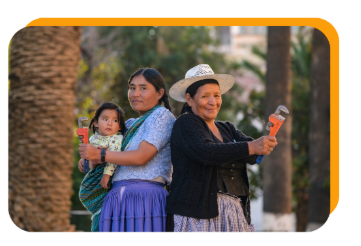
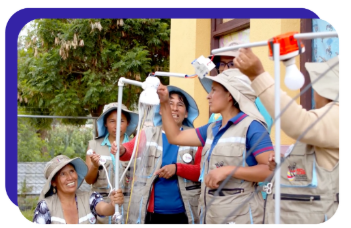
Pictured Left: Bertha Cuchallo carries her baby and a spirit of empowerment while standing alongside fellow participant Antonia Paraguayo. Pictured Right: Fundacíon Infocal conducts the training course with 70% technical knowledge and 30% theory, verifying participants obtain the required skills for the field.
Another participant shared how this training could impact her family. Aleita Fernández wakes at 5 am to cut hay, then gets her children ready for their chores. She drives them to school, works a full day, and returns home by 8 pm. "If plumbing were a stable job, I would dedicate myself solely to it so I could have more time with my children," she says.
A second Red de Mujeres Plomeras training is already underway in the Arani Municipality, equipping even more women in rural Bolivia with technical skills to operate and maintain water and sanitation systems long-term.
We know that people like Bertha, Antonia, and Aleita are at the heart of our work. That’s why we partner with communities and governments to ensure water sources are protected, infrastructure can handle more extreme weather events, sanitation is safely managed, and funds are set aside for ongoing operation and maintenance.
All of this is part of our Everyone Forever model, ensuring that this work lasts for every family, school, and clinic. Donate now to safe water and sanitation that ends the cycle of poverty.
Additional Resources:
- ¹ Water For People monitoring and evaluation tracking system, Household Sanitation and Water – Level of Service in the Everyone Forever district of Arani, Bolivia (2017-2024).
- Tackling diarrhea worldwide can generate $86 billion per year in increased productivity and reduced health costs. The Economist, "Harnessing the economic benefits of investment in water, sanitation, and hygiene in Africa," 2023.
- Globally, 1.6 billion people live in hotspots marked by high poverty and low water and sanitation access. This figure is projected to double by 2050 if current trends continue. The World Bank Group, "Water for Shared Prosperity," 2024.
- The annual economic value of water and freshwater ecosystems is estimated to be $58 trillion – equivalent to 60% of global Gross Domestic Product (GDP). The World Wildlife Fund, "The High Cost of Cheap Water," 2023.
- Watch this group of women plumbers in action here on YouTube.