Water Access That Lasts – With Bananas
Chapepa and Mchinga Villages have long faced the impacts of climate change. Prolonged drought and flooding have disrupted life for the 85 households that live there. Families used to fetch water from nearby streams – small sources that often dried up during the hot season. "We would travel a one-hour distance to find a stream of water, especially during the drought season," recalls Joy Evans, a resident of Chapepa. "During the rainy season, floods would contaminate the small water bodies we used to fetch water."
Water For People partnered with the District of Chikwawa and local communities to drill a borehole and install a handpump, bringing reliable water closer to home. "With the borehole, we no longer walk distances for water," says Joy. "We spend no more than five minutes fetching water, giving us more time for farming and business." Joy was inspired to volunteer for the community water committee and was selected as one of 10 members. Together, the committee manages the borehole and ensures it stays functional.
To help fund ongoing maintenance of the borehole, households contribute MKW 200 (USD 0.12). However, the committee knew they needed additional funds, so they turned to what was working in their environment. "We normally experience prolonged drought due to climate change. Hence, growing vegetables is challenging here. The moisture quickly leaves the soil," Joy explains. "So, we decided to start growing bananas as these fruits are profitable – hence their profits can easily sustain the borehole."
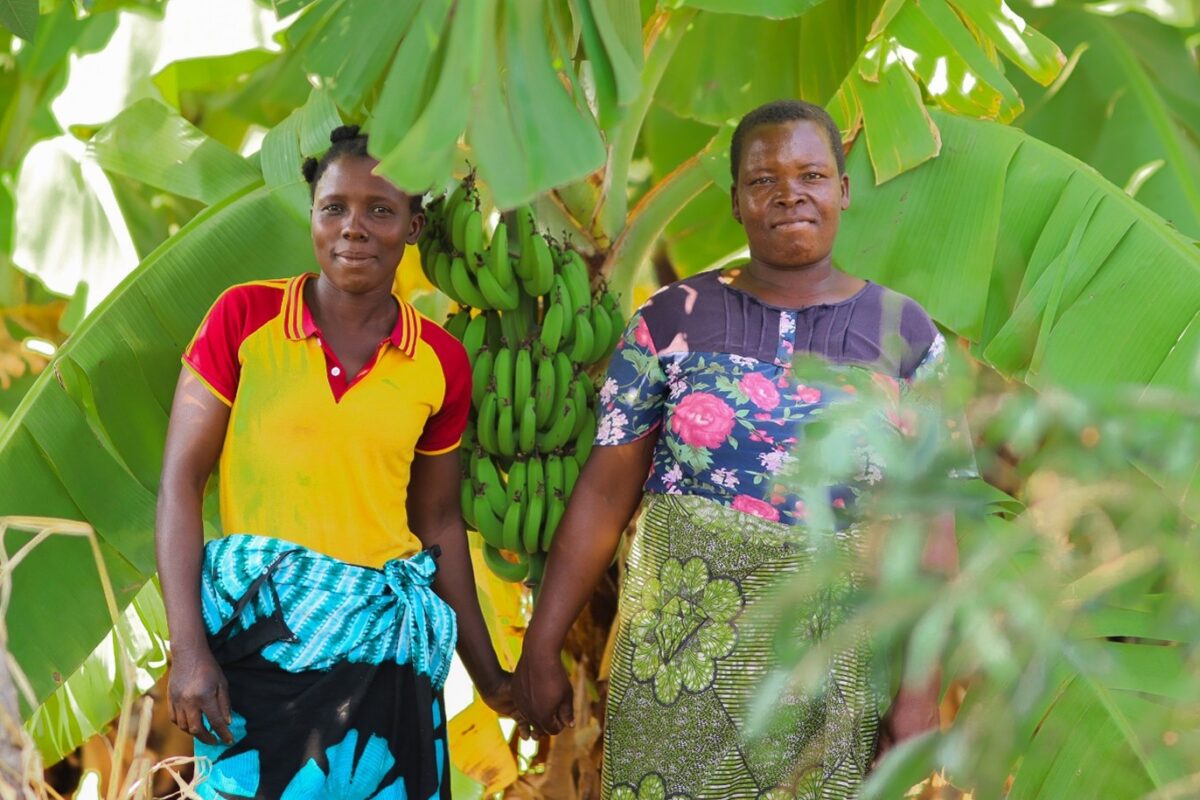
The committee uses income from banana sales, along with the household contributions, to purchase spare parts and pay the pump mechanic when needed.
"The profits from the sales and the contribution of the community have enabled us to maintain the borehole since 2018," says Joy.
Even the water that runs off from the handpump is put to use. "The extra water is collected and used to water the bananas," she shares. "The banana farming contributes to borehole banking, which helps in the maintenance of the borehole."
Now, the committee is planning even bigger – aiming to expand their farming efforts and involve even more community members. "We are yet to form a group consisting of all members of the committee and 10 volunteers from the two villages. This is to make sure that we have active participants who support our long-term vision," says Joy.
This approach shows how long-term water access is deeply connected to livelihoods and resilience to climate change – especially for women and girls who have reclaimed their time and are driving new opportunities for their futures.